


For more than two decades, Google shaped how people discover information online. That model is now changing.
ChatGPT users send 2,5+ billion prompts every day, while platforms like Perplexity and Gemini are being adopted as daily research tools.
What’s different about AI-driven search is not just the interface; it’s the outcome.
Instead of showing ten blue links, AI systems generate one synthesized answer, pulling information from a limited set of sources they trust.
That changes the rules.
If your brand, product, or content is not part of the knowledge layer AI models rely on, you don’t just lose rankings, you disappear from the conversation entirely.
This shift has created a new discipline: Generative Engine Optimization (GEO).
GEO is the practice of making sure that large language models like ChatGPT, Claude, Gemini, and Perplexity understand, trust, and reference your brand when answering questions. It sits at the intersection of SEO, digital PR, content strategy, and knowledge graph engineering.
And it requires an entirely new type of tooling.
Below, we explore the 9 best GEO tools to use in 2026, shaping how brands are discovered, understood, and recommended by generative AI systems.
How generative search really works
Unlike search engines, AI models don’t “crawl” the web in real time.
They rely on a mix of:
- Training data from public web content
- Licensed datasets
- Trusted publishers
- Structured knowledge graphs
- Retrieval systems that pull live sources
When a user asks a question like “What’s the best project management software?”, the model doesn’t rank websites. It chooses which entities and sources it believes are authoritative and synthesizes a single answer.
That means GEO is less about keywords, and more about:
- Entity clarity
- Topical authority
- Source credibility
- Consistency across the web
This is where GEO platforms come in.
Top 9 Generative Engine Optimization Tools in 2026
1. Atomic AGI
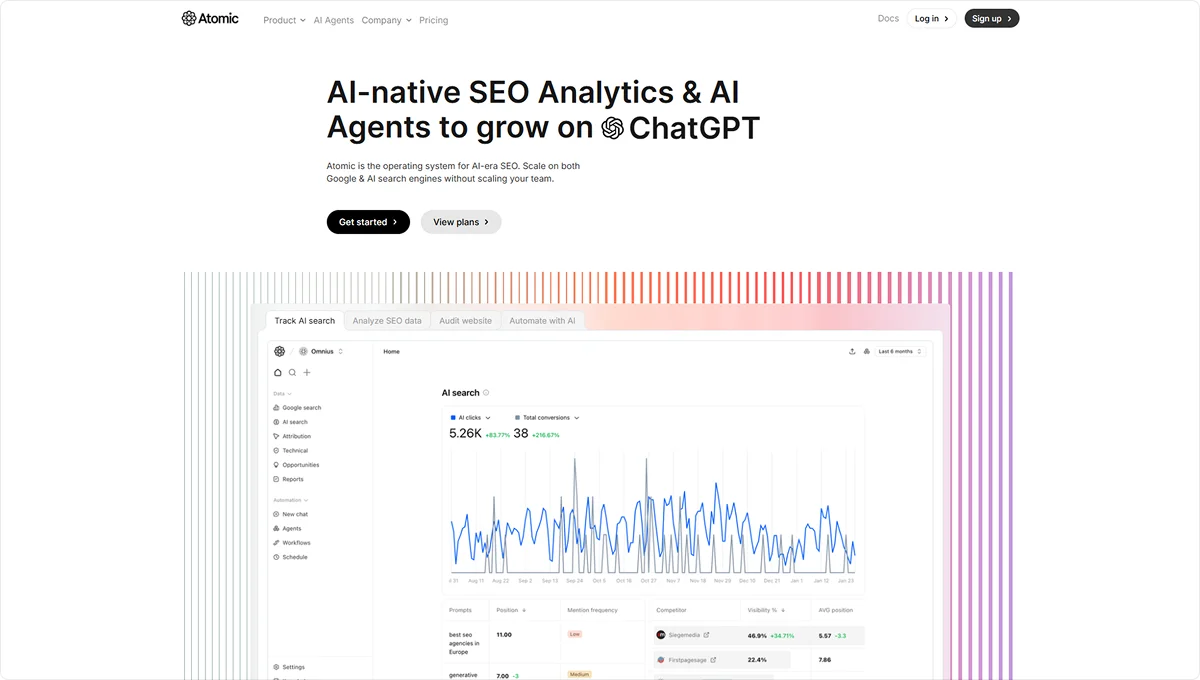
Atomic is an AI-native platform that combines Google SEO analytics, AI search tracking, technical auditing, and workflow automation in one place; built for the AI search and GEO from the ground up rather than adapted from a traditional SEO tool.
- AI Search / Answer-Engine Tracking: Maps when and how your pages are surfaced by generative engines.
- Text Intelligence & NLP Scoring: Paragraph-level optimization scores, topical authority recommendations, and entity gap detection.
- AI-Citation & Prompt Visibility: Shows how you are cited or paraphrased by LLMs and which user prompts surface your content.
- Unified Analytics & Attribution: Combines AI referral data with GSC/GA4 and conversion events so text optimizations link to revenue.
- Technical SEO & Rapid Indexing: Automated audits, indexing checks, and recommendations to help LLMs consume your content.
- Reporting & Collaboration: Shareable, actionable reports that explain AI search trends at the sentence and page level.
Pricing
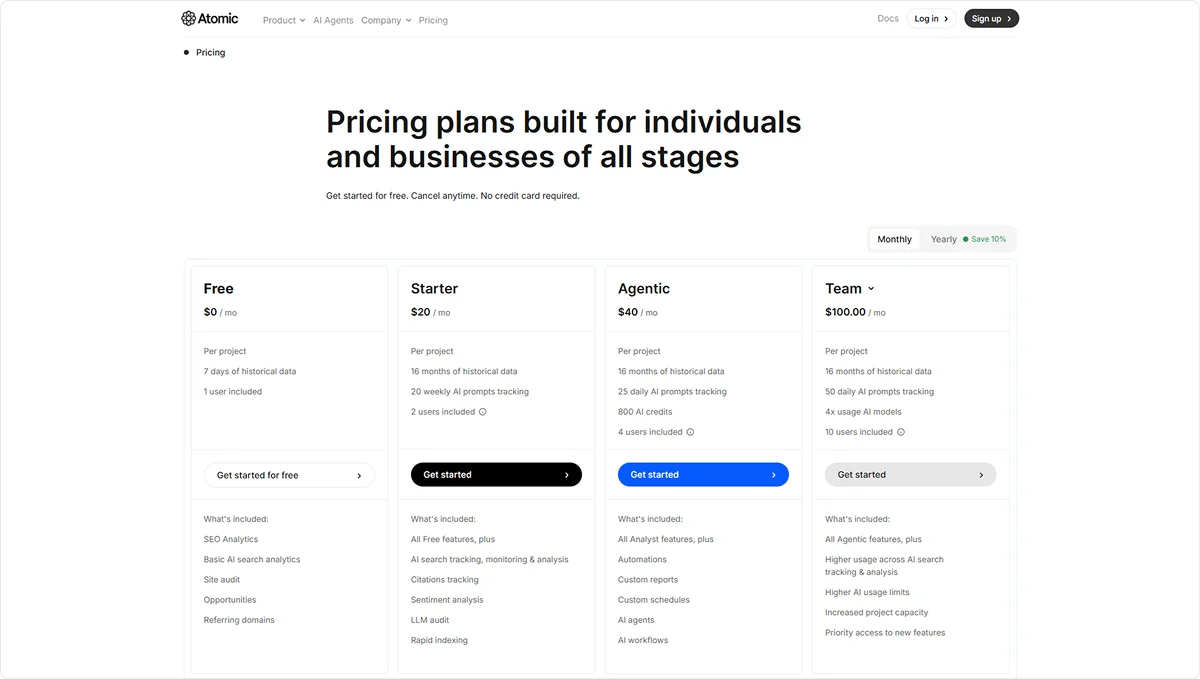
Free tier available. Starter $20/month, Agentic (includes automation) $40/month, Team $100/month.
2. Profound
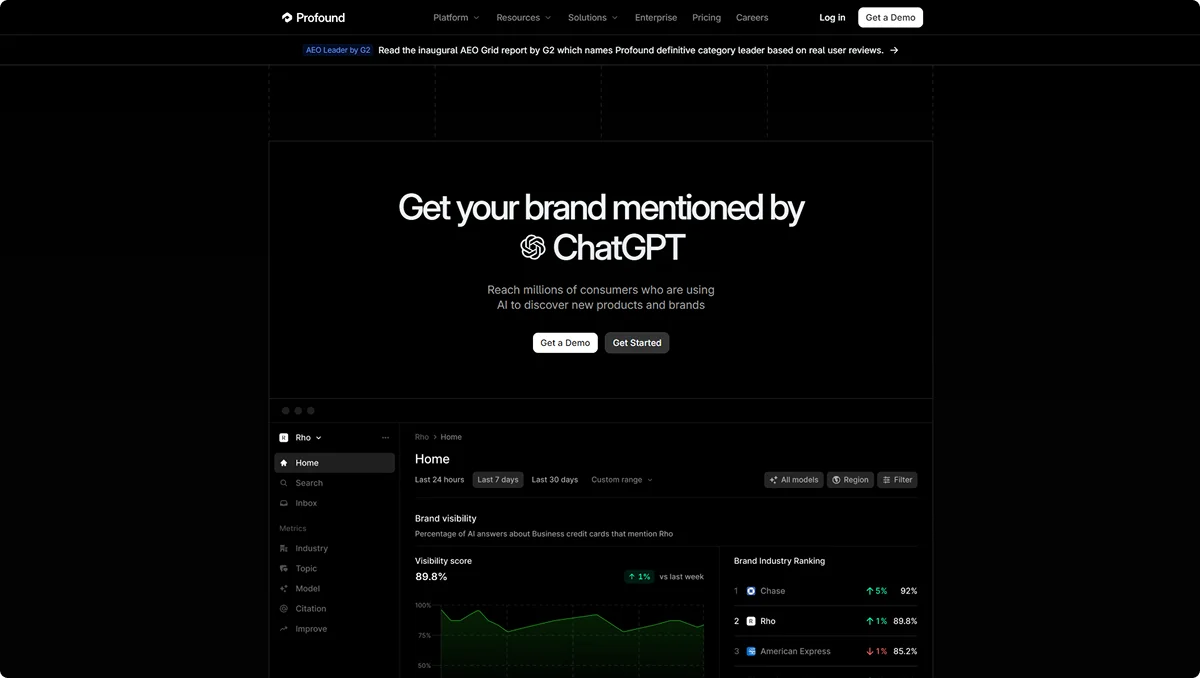
Profound is a Generative Engine Optimization platform designed to monitor and optimize how brands appear inside large language models. It tracks how ChatGPT, Claude, Gemini, and Perplexity describe companies, products, and categories, allowing enterprises to understand their AI-level brand positioning.
The platform focuses on how knowledge graphs, training data, and prompt-based retrieval shape brand visibility across generative interfaces.
- AI Brand Perception Tracking: Monitoring how LLMs summarize and describe your brand across prompts and topics.
- Generative Search Visibility Audits: Analyzing where and how often your brand is mentioned inside AI responses.
- Prompt & Query Intelligence: Identifying the queries and research paths that lead AI engines to recommend competitors.
- Knowledge Graph Optimization: Mapping how your company is represented across training sources, structured data, and entity relationships.
- Competitive AI Benchmarking: Comparing your AI presence to competitors across multiple models.
Pricing
Custom enterprise pricing based on brand size, number of tracked models, and competitive scope.
3. Brand24
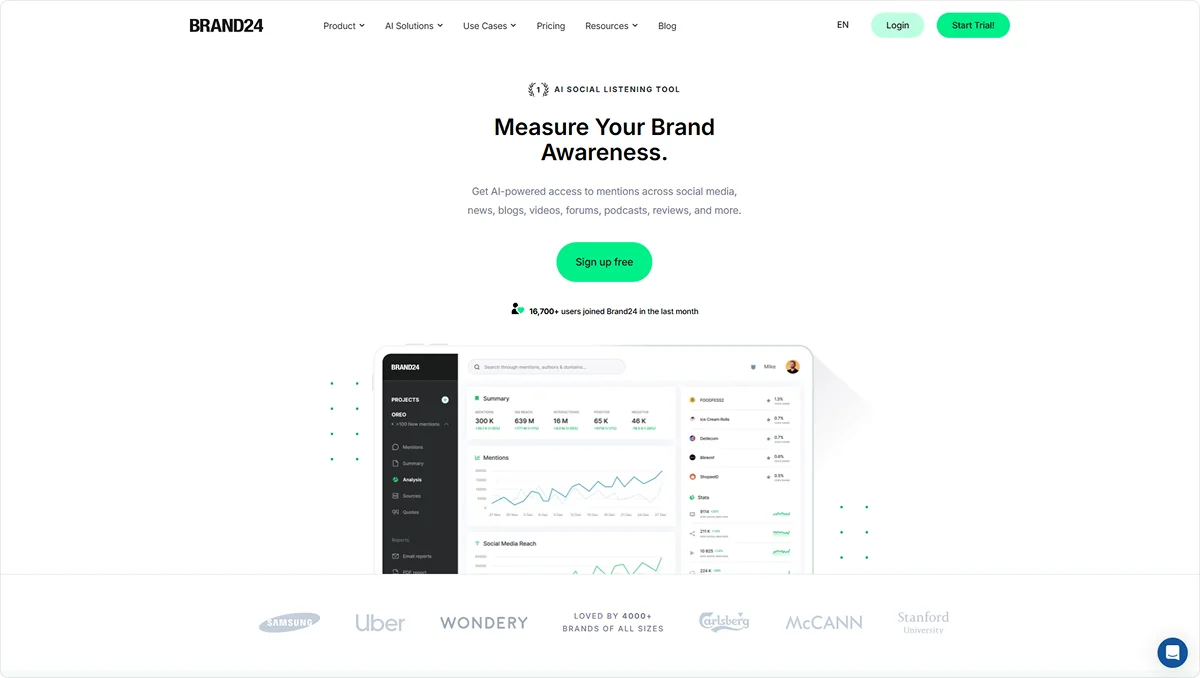
Brand24 is a digital monitoring and intelligence platform increasingly used for GEO because of its ability to track brand mentions across the open web, including many of the sources AI systems use for training and retrieval.
For GEO teams, Brand24 provides early signals of brand authority, citation volume, and reputational signals that influence AI-generated answers.
- Brand Mention Monitoring: Tracks citations of your brand across news, blogs, forums, and social platforms used by AI models.
- Reputation & Sentiment Analysis: Evaluates whether your brand is referenced positively, neutrally, or negatively.
- Influencer & Publisher Discovery: Identifies authoritative sites that shape AI knowledge bases.
- Competitive Visibility Tracking: Compares how often competitors are referenced relative to your brand.
- Alerting & Trend Detection: Notifies teams when major coverage shifts occur.
Pricing
Tiered SaaS pricing based on volume of mentions and brands monitored.
4. Glimpse
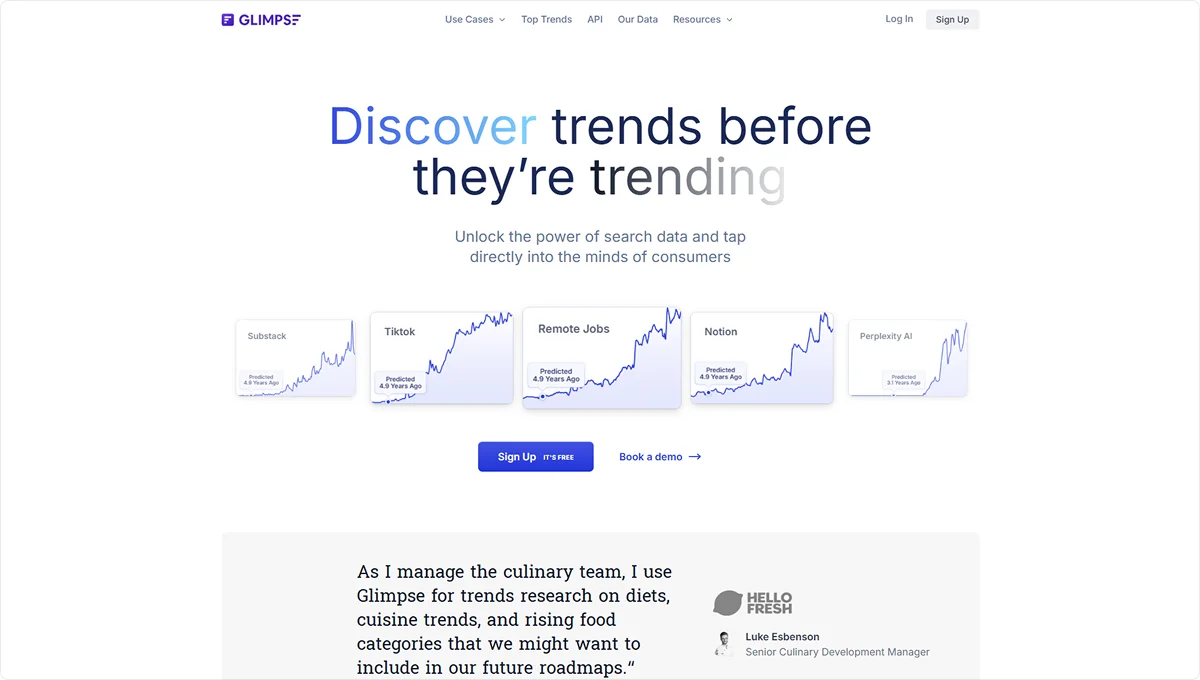
Glimpse is an AI-driven trend and topic discovery platform used to identify what users are beginning to search for, before it becomes mainstream. In GEO workflows, Glimpse helps brands publish content ahead of AI adoption curves, allowing them to become early authoritative sources.
- Emerging Topic Detection: Identifies rising search and conversational patterns across industries.
- Query Trend Analysis: Surfaces how people phrase problems, comparisons, and research.
- Content Opportunity Mapping: Finds low-competition topics likely to be referenced by AI systems.
- AI Search Signals: Highlights topics gaining traction in generative answer engines.
- Market & Category Insights: Shows where user interest is shifting before traditional SEO data catches up.
Pricing
Subscription-based pricing depending on number of tracked categories and queries.
5. Semrush – AI Brand Visibility
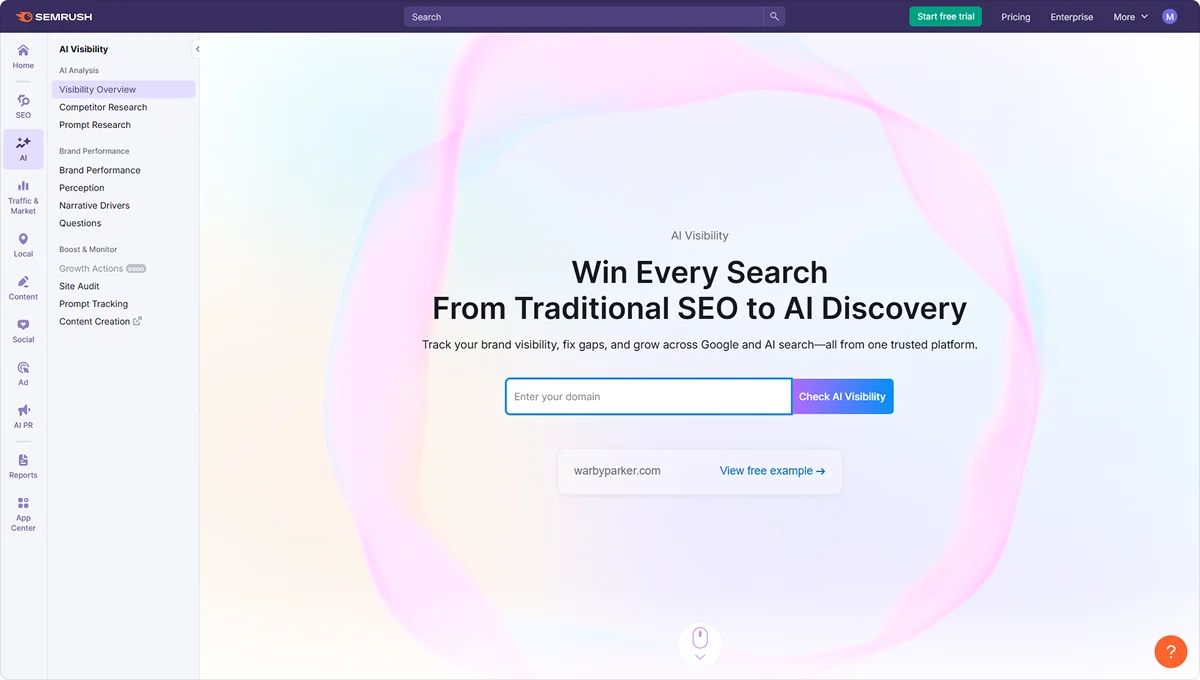
Semrush’s AI Brand Visibility system measures how often and in what context brands appear inside AI-powered search results, including Google AI Overviews and generative SERPs. Instead of tracking rankings alone, it shows whether AI systems are actually mentioning and recommending your brand when users search.
For GEO teams, this bridges the gap between traditional SEO and generative discovery by revealing how search engines’ AI layers interpret brand authority.
- AI Brand Mention Tracking: Monitors when your brand is referenced in Google AI Overviews and AI-enhanced SERPs.
- Generative SERP Visibility: Shows how often your brand appears inside AI-generated result panels.
- Competitor AI Presence: Compares your AI search visibility against rival brands.
- Query-Level AI Coverage: Reveals which searches trigger your brand in AI results.
- Trend & Exposure Reporting: Tracks growth or decline in generative search exposure over time.
Pricing
Available within Semrush’s subscription plans, with advanced AI visibility features included in higher tiers.
6. Ahrefs – Brand Radar
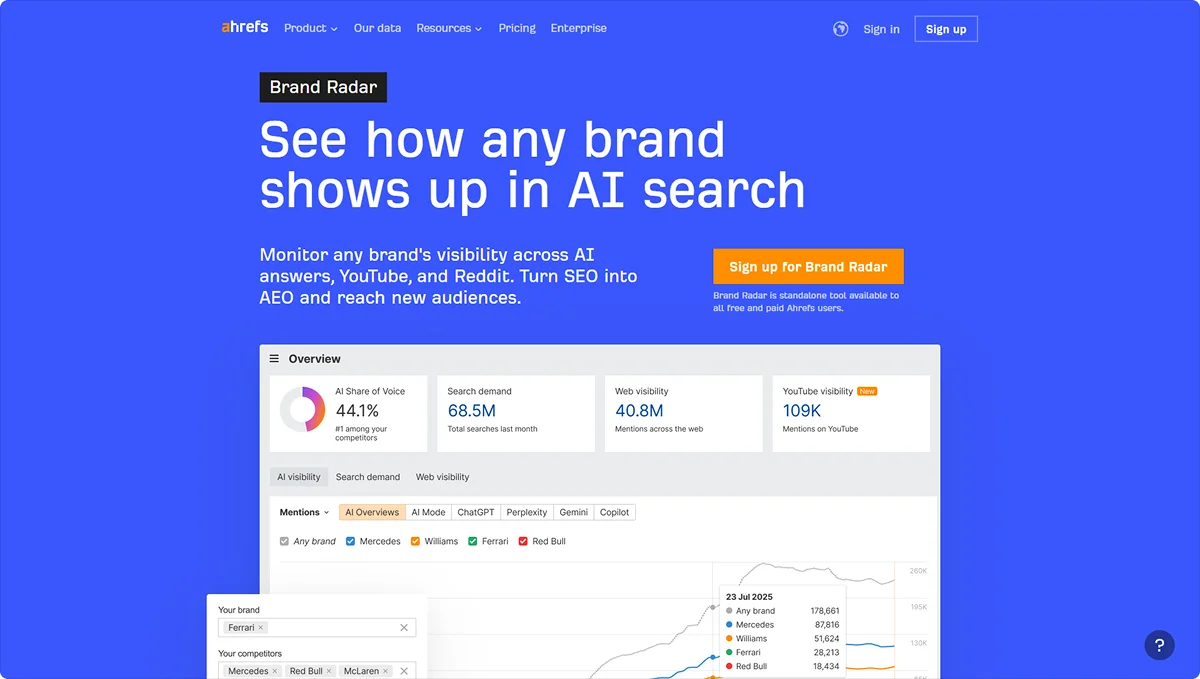
Ahrefs Brand Radar is designed to measure brand visibility inside AI-powered search environments by tracking mentions across Google AI Overviews and other generative search features. It shows how often your brand is included when AI summarizes, compares, or recommends products and services.
In GEO, Brand Radar is used to understand whether your brand has become part of the AI knowledge layer or is being replaced by competitors.
- AI SERP Brand Tracking: Monitors brand mentions in AI Overviews and generative results.
- Competitive Share of Voice: Shows which brands dominate AI-generated search responses.
- Topic-Level AI Coverage: Identifies which themes and queries trigger brand inclusion.
- Visibility Trend Analysis: Tracks changes in how often AI engines surface your brand.
- Search Demand Correlation: Links AI exposure with real user search behavior.
Pricing
Included within Ahrefs subscription tiers, with AI visibility features available on higher plans.
7. Surfer SEO
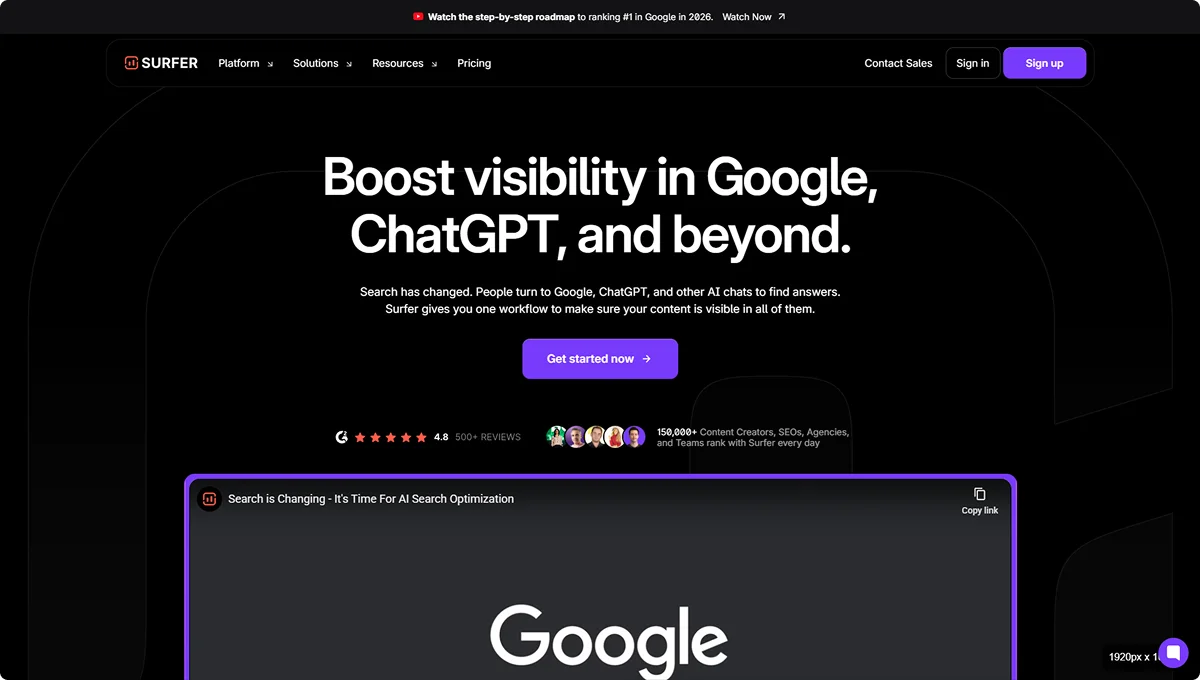
Surfer SEO helps brands structure content for semantic coverage and topical depth, which directly impacts whether LLMs understand and reuse your material.
- Content Structure Optimization: Ensures pages fully cover AI-relevant topics.
- Semantic Keyword Modeling: Builds topic clusters for authority.
- Content Scoring & Benchmarks: Measures relevance against top sources.
- SERP-Driven Topic Analysis: Aligns content with what AI engines retrieve.
- Editorial Workflow Tools: Supports scaling AI-friendly content.
Pricing
Monthly SaaS pricing with team tiers.
8. Frase
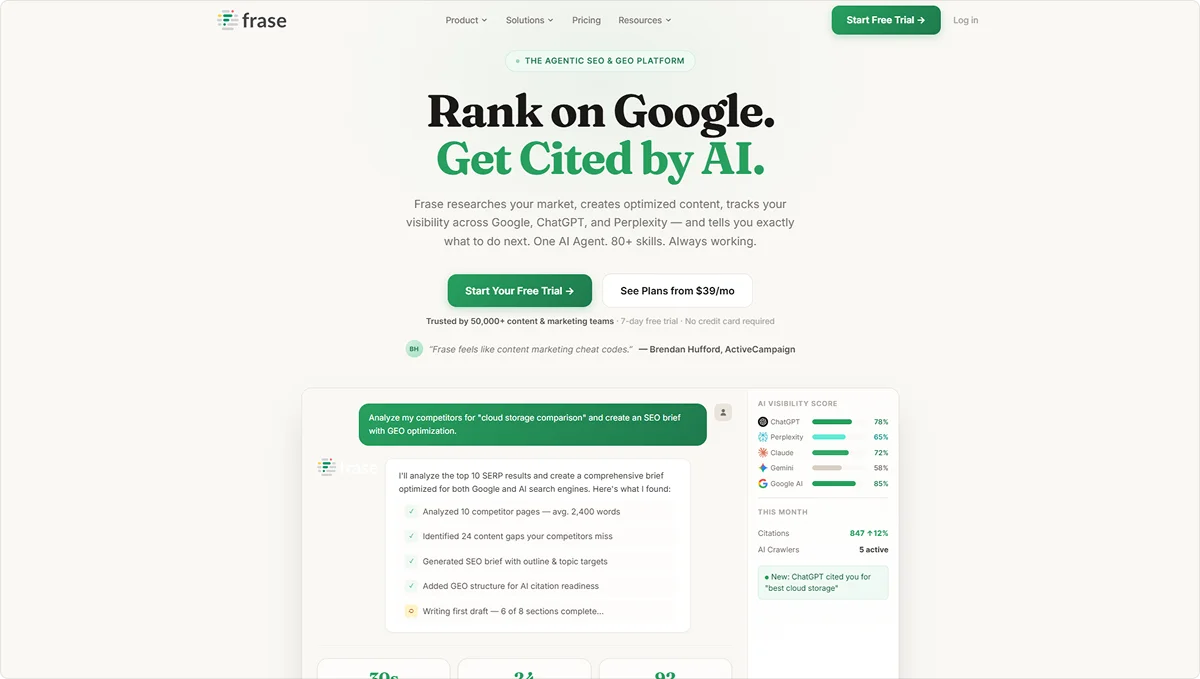
Frase is a content research and optimization platform designed to answer the questions people actually ask, the same ones AI engines pull into generated responses.
- Question & Query Mining: Finds the prompts AI systems use.
- Topic Modeling: Organizes content into entity-based clusters.
- Content Brief Generation: Builds outlines aligned with AI-retrieval patterns.
- Competitive Answer Analysis: Shows what AI-friendly pages include.
- Content Optimization: Improves factual and topical completeness.
Pricing
Subscription-based SaaS pricing.
9. Schema App
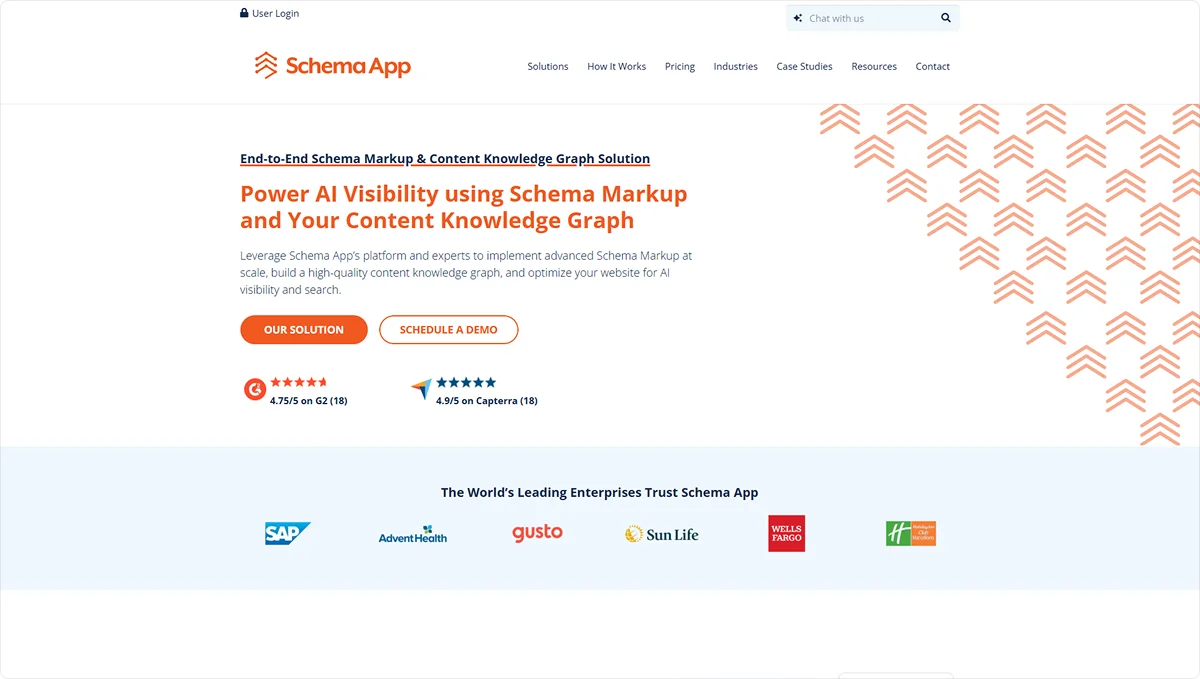
Schema App is a structured data and entity management platform that feeds clean, machine-readable information directly into AI knowledge graphs.
- Entity Markup & Schema Deployment: Defines products, companies, and relationships.
- Knowledge Graph Development: Builds structured representations of your brand.
- AI-Readable Data Feeds: Improves how LLMs understand your business.
- Enterprise Data Governance: Maintains accuracy across large sites.
- Search & AI Integration: Aligns structured data with generative engines.
Pricing
Enterprise pricing based on scale and implementation.
Why These Platforms Matter
Traditional SEO optimized for ranking pages.
Generative Engine Optimization optimizes for being included in answers.
The difference is critical:
- SEO wins traffic
- GEO wins trust
AI engines choose a handful of sources to synthesize every response. The platforms above help you become one of those sources.
They allow enterprises to:
- Measure AI brand perception
- Identify authoritative publishers
- Structure content for machine understanding
- Build long-term visibility inside LLMs
The Future of Search is Being Written Right Now
Every article published, every dataset structured, and every authoritative mention contributes to the knowledge base that large language models will use for years to come.
What makes this moment unique is that early movers get a compounding advantage. When AI systems decide which brands to trust, they rely on patterns: consistency, repetition, authority, and clarity across the web. The companies that establish themselves now as reliable sources will not just appear in more answers; they will become the default answers.
This is why GEO tools matter.
Without visibility platforms, you can’t see how AI models currently understand your brand. Without entity and content tools, you can’t control what those models learn about you. And without monitoring how generative search is evolving, you’re optimizing for a version of search that is already disappearing.
In the coming years, three things will matter more than anything else in AI-driven discovery:
- Entity clarity: AI must know exactly who you are, what you do, and how you relate to your market.
- Authority signals: AI models trust brands that are consistently cited by high-quality sources.
- Semantic coverage: Content that fully explains a topic will always beat content that just targets keywords.
GEO tools are the infrastructure that makes all of this measurable, scalable, and controllable. Companies that adopt them early will shape how generative engines understand their category.
Conclusion
Buyers are asking AI which software to buy, which agencies to hire, and which brands to trust. If your company is not part of those answers, you are invisible.
The next generation of search leadership will belong to companies that treat AI engines as the new search layer and invest in GEO as seriously as they once invested in SEO.
These platforms form the foundation of that strategy, not to chase rankings, but to own knowledge, authority, and presence inside the machines that now shape how the world discovers brands.
As generative AI becomes the front door to digital discovery, GEO is no longer optional; it is foundational. But succeeding requires more than tools. It requires a strategy that blends entity engineering, content authority, and AI-aware search architecture.
That’s where Omnius comes in. By combining deep technical SEO, advanced content strategy, and hands-on experience with AI-driven search systems, Omnius helps brands move beyond rankings and become the sources that generative engines actually trust, reference, and recommend.
FAQ
1. What is Generative Engine Optimization (GEO)?
Generative Engine Optimization (GEO) is the process of optimizing your brand and content so AI systems like ChatGPT, Perplexity, and Gemini understand and reference them when generating answers.
2. How is GEO different from traditional SEO?
SEO focuses on ranking websites in search results, while GEO focuses on getting your brand included in AI-generated answers by building authority, clear entities, and trusted sources.
3. Why are GEO tools important?
GEO tools help brands track how AI models mention and interpret them, identify visibility gaps, and optimize content so they can be recommended in AI-driven search results.
Nguồn: omnius.so